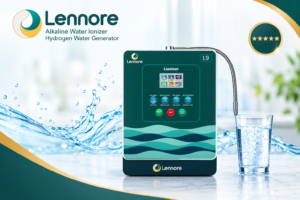
Are you confused about choosing between alkaline water and RO water for your home? With so many water purification technologies available today, it is natural to wonder which option is right for your family.
RO water is widely used for water purification, while alkaline water is often discussed because of its higher pH. Although both are associated with drinking water, they serve different purposes.
Understanding the difference between alkaline water vs RO water can help you make a more informed decision. Let’s explore how these technologies work, what TDS and pH mean, and how to choose a suitable water system for your home.

What Is RO Water?
RO stands for Reverse Osmosis, a water purification process that uses a semipermeable membrane to reduce many dissolved substances in water.
An RO water purifier is commonly used when the source water contains elevated dissolved solids or other contaminants that require treatment.
During the purification process, water passes through a specialised membrane that helps separate many dissolved impurities. Depending on the model, additional filters may also be included to improve treatment performance.
Benefits of an RO Water Purifier
- Helps reduce many dissolved substances, depending on the system.
- Can be suitable for certain water sources with elevated dissolved solids.
- May include additional filtration stages for specific water quality requirements.
- Provides a practical purification option when selected according to water testing and verified performance.
However, RO systems may produce wastewater and require regular maintenance. Their effectiveness also depends on the incoming water quality, membrane condition, and system design.
What Is Alkaline Water?
Alkaline water is water with a pH above 7. The pH scale indicates how acidic or alkaline a liquid is.
An alkaline water machine, commonly called a water ionizer, uses electrolysis to change the pH of suitable incoming water. Depending on the machine and its settings, it can produce water at different pH levels.
Many people explore alkaline water as part of their daily hydration routine. However, claims that alkaline water prevents or cures diseases should not be accepted without reliable scientific evidence.
How Does an Alkaline Water Machine Work?
A water ionizer contains an electrolysis chamber with electrodes. As suitable water passes through the chamber, an electrical process changes its pH.
The resulting water characteristics depend on the incoming water quality, the machine’s technology, and the selected settings.
It is important to remember that changing the pH of water is not the same as removing contaminants. An alkaline water machine should not replace an appropriate purification system unless its purification capabilities have been independently verified.
Alkaline Water vs RO Water: Key Differences
RO purification and alkaline water ionization perform different functions.
| Feature | RO Water Purifier | Alkaline Water Machine |
|---|---|---|
| Main purpose | Reduces many dissolved substances | Changes water pH through ionization |
| Technology | Reverse osmosis membrane | Electrolysis |
| Effect on TDS | Generally reduces TDS | Does not necessarily reduce TDS |
| Effect on pH | Depends on the system and source water | Can increase pH, depending on settings |
| Contaminant removal | Depends on verified system performance | Cannot be assumed without supporting specifications |
| Maintenance | Filters and membrane may need replacement | Cleaning or servicing depends on the model |
The main difference is simple: RO focuses on purification, whereas alkaline water ionization focuses on changing pH.
What Is an RO Alkaline Water Purifier?
What if you want both water purification and alkaline water functionality?
An RO alkaline water purifier combines reverse osmosis filtration with an alkaline water ionization stage. The RO stage is intended to reduce specified contaminants, while the ionization stage changes the pH of the treated water.
This type of system may be suitable for households that require RO purification and also want the additional functionality of alkaline water ionization.
However, the performance of combination systems varies by model. Before buying one, check its verified purification capabilities, final output-water quality, maintenance requirements, and installation specifications.
Lennore offers selected RO + alkaline water configurations. You can explore the available models at www.lennore.in and confirm which features are suitable for your household.
Understanding TDS and pH in Drinking Water
TDS and pH are two important terms to understand when comparing water purification and ionization technologies.
What Is TDS?
TDS stands for Total Dissolved Solids. It measures the concentration of dissolved substances in water and is commonly expressed in parts per million (ppm) or milligrams per litre (mg/L).
A TDS meter provides a useful indication of dissolved-solids levels. However, it cannot identify every contaminant or confirm that water is completely safe to drink.
What Is pH?
pH indicates how acidic or alkaline water is. A pH of 7 is neutral under standard conditions, while a pH above 7 is alkaline.
RO treatment and alkaline ionization can affect pH and TDS differently. Therefore, neither measurement should be used alone to judge overall water quality.
For better results, assess your source water and choose a treatment system based on the contaminants that need to be reduced.
How to Choose the Right Water System for Your Home
The best water system depends on your water source, water quality, and household requirements.
Choose an RO water purifier when testing indicates that RO treatment is appropriate for reducing dissolved substances or other specified contaminants.
Consider an alkaline water machine when your water is already suitably treated for drinking and you want the additional functionality of pH adjustment.
Consider an RO + alkaline system when you need RO purification and also want alkaline water functionality in one appliance.
Before making a decision, compare purification performance, water usage, maintenance costs, installation requirements, and product specifications. Avoid choosing a system based only on a high pH reading or a low TDS reading.
Conclusion
Understanding alkaline water vs RO water makes it easier to choose a suitable water treatment system. RO purification helps reduce many dissolved substances, while an alkaline water machine changes the pH of suitable water. An RO alkaline water purifier combines these two functions in one system.
Neither technology is automatically the best choice for every household. Your decision should be based on source-water quality, verified product performance, and your specific requirements.